MEP Prefabrication Services combine advanced MEP BIM modeling, modular fabrication strategies, and precise coordination to streamline the design-to-installation workflow, helping contractors and fabricators deliver consistent quality while reducing rework, delays, and unexpected costs.
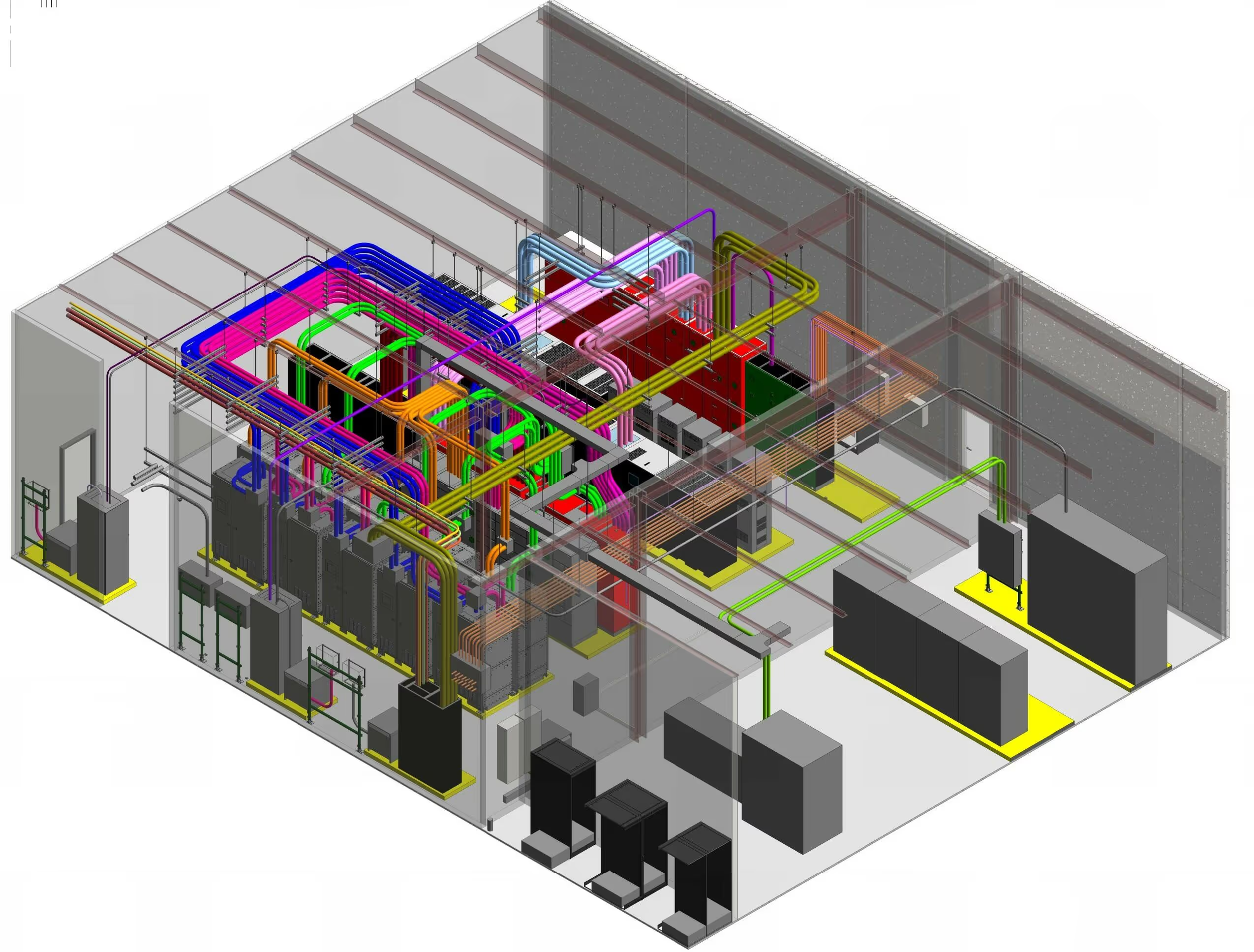
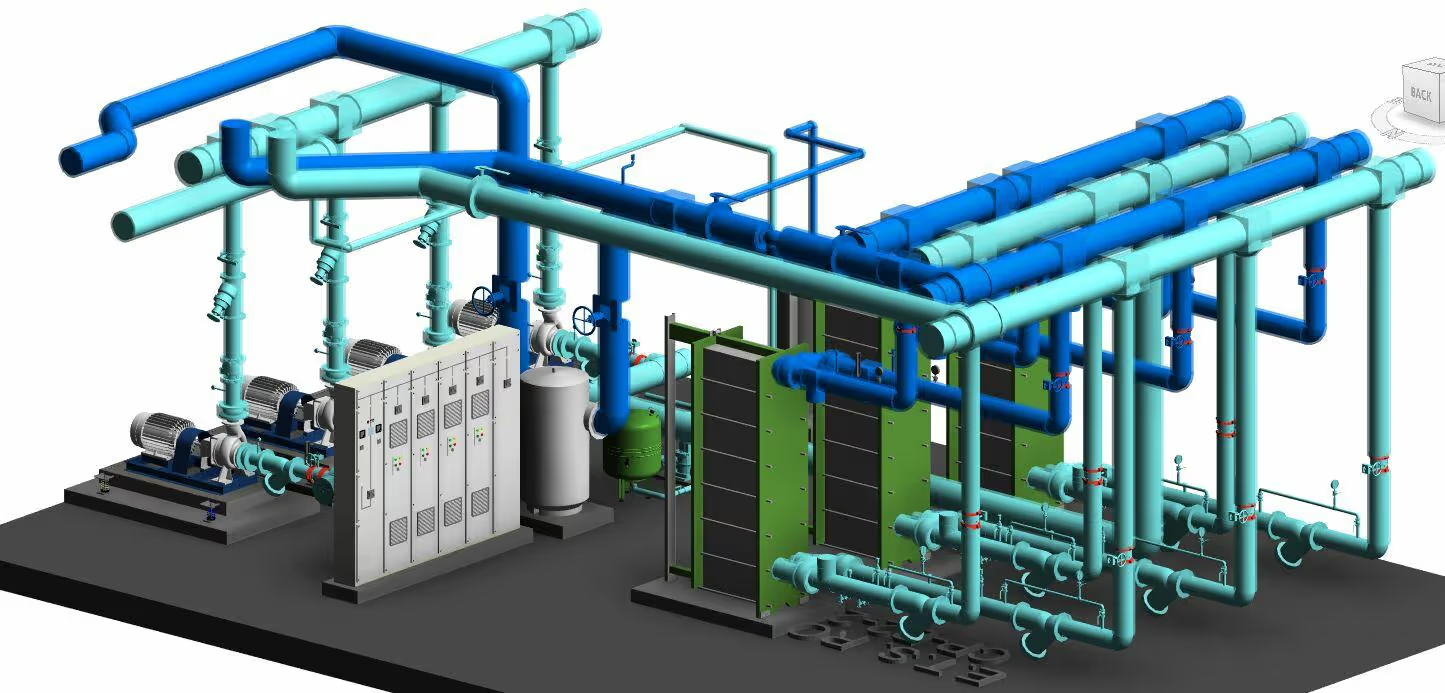
Request a CallOur MEP prefabrication services convert coordinated BIM models into fabrication-ready assemblies, accelerating construction & reducing error. We create highly detailed 3D models for mechanical, electrical, plumbing, and fire protection systems, specially optimized for off-site manufacturing. Each module or spool, including duct sections, pipe spools, multi-trade racks, riser modules, headwalls, and equipment skids, is modeled with precise dimensions, joints, supports, and clearances to provide accuracy during production and installation.
Our experts work closely with contractors and fabricators to understand & include real manufacturing constraints such as spool lengths, connection types, transport limits, lifting requirements, and installation sequences. We use top software like Revit and Navisworks to create fabrication-level models along with spool drawings, module layouts, cutting lists, hanger schedules, and BOMs. To help our clients better, all our deliverables undergo strict QA/QC checks to ensure constructability and clash-free coordination, and benefit from improved installation speed, reduced rework, higher safety, and consistent quality.
With over ten years of experience, Techture has established itself leading BIM service provider and delivers BIM models that strengthen project coordination and support smooth fabrication and construction planning. With more than 1,100 projects completed across different regions, our team converts design inputs into accurate, well-structured digital models that improve constructability, cut down on rework, and give all stakeholders a clear understanding of project conditions.
Techture's MEP prefabrication modeling service provides fabrication-ready models for mechanical, electrical, plumbing & fire protection (MEPF) systems. We convert these BIM designs into accurate modular assemblies, such as pipe spools, duct modules, riser stacks, multi-trade corridor racks, valve assemblies, and equipment skids, all drafted with accurate dimensions, fittings, slopes, insulation, supports, and connection types. Every element is developed to fabrication-level detail, ensuring that what is modeled can be manufactured without ambiguity or rework.
We incorporate real fabrication and installation constraints into the model, including spool lengths, bending limitations, shop standards, transport restrictions, lifting points, and on-site sequencing. Our experts use Revit, AutoCAD MEP, and Navisworks to produce high-quality spool drawings, module layouts, cutting lists, penetration plans, hanger schedules, and detailed BOMs ready for shop production. This data-driven approach reduces rework, minimizes waste, and ensures consistent quality, resulting in helping clients with safer, faster, and more predictable construction for MEP contractors.
.avif)
.webp)
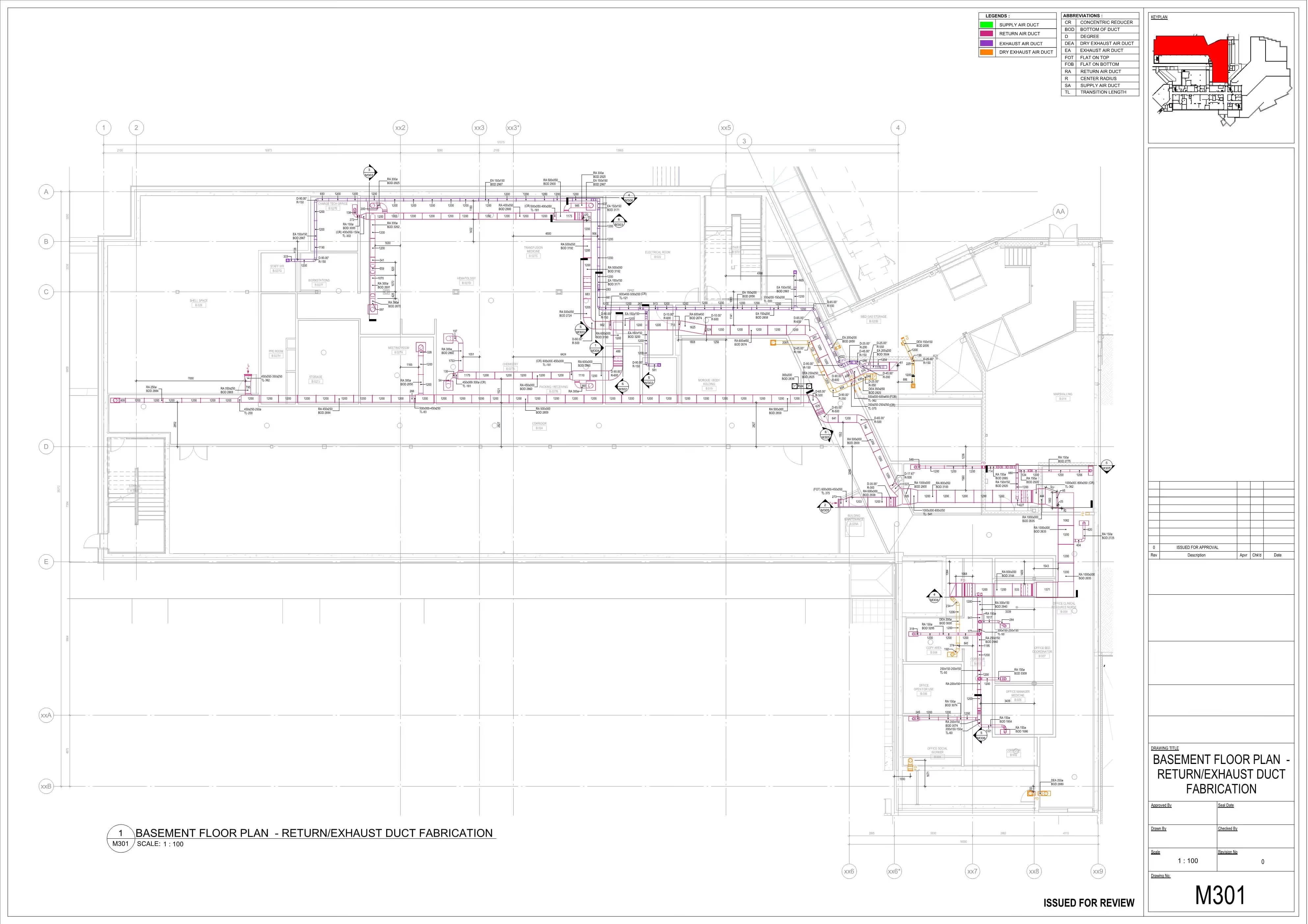
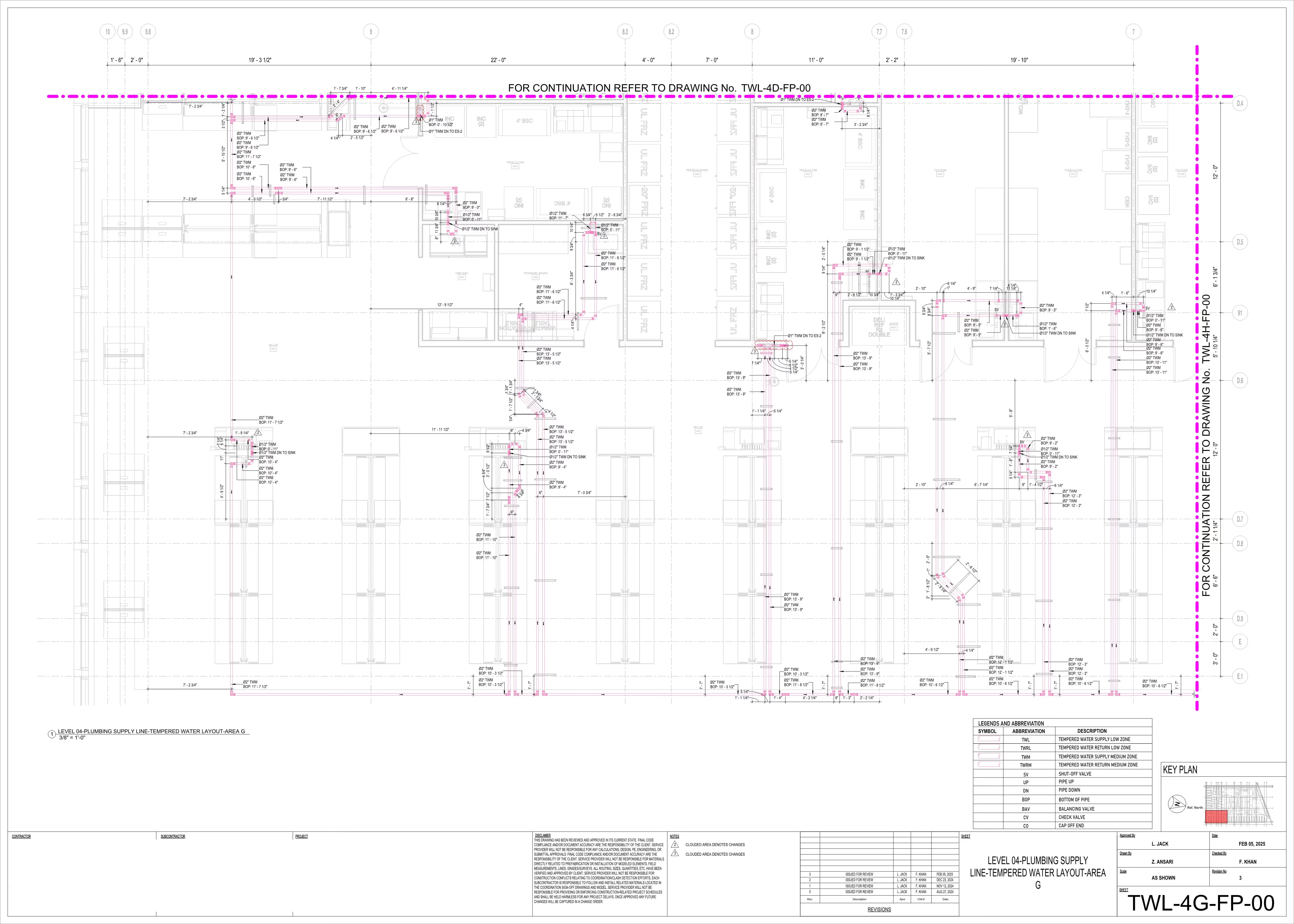
Our MEP fabrication & shop drawings service helps clients with true field installation conditions representations. We create detailed plans, sections, isometrics, spool drawings, hanger layouts, sleeve/penetration drawings, and equipment installation sheets from the well-coordinated models. Each drawing incorporates exact dimensions, elevations, slopes, fitting types, insulation details & manufacturer-specific components.
We make sure our deliverables comply with SMACNA, ASHRAE, NFPA, IPC, and regional construction standards to ensure accuracy during fabrication and site execution. By aligning with real-world fabrication constraints and contractor standards, we help MEP teams with faster timelines, improved accuracy, and reduced site conflicts.
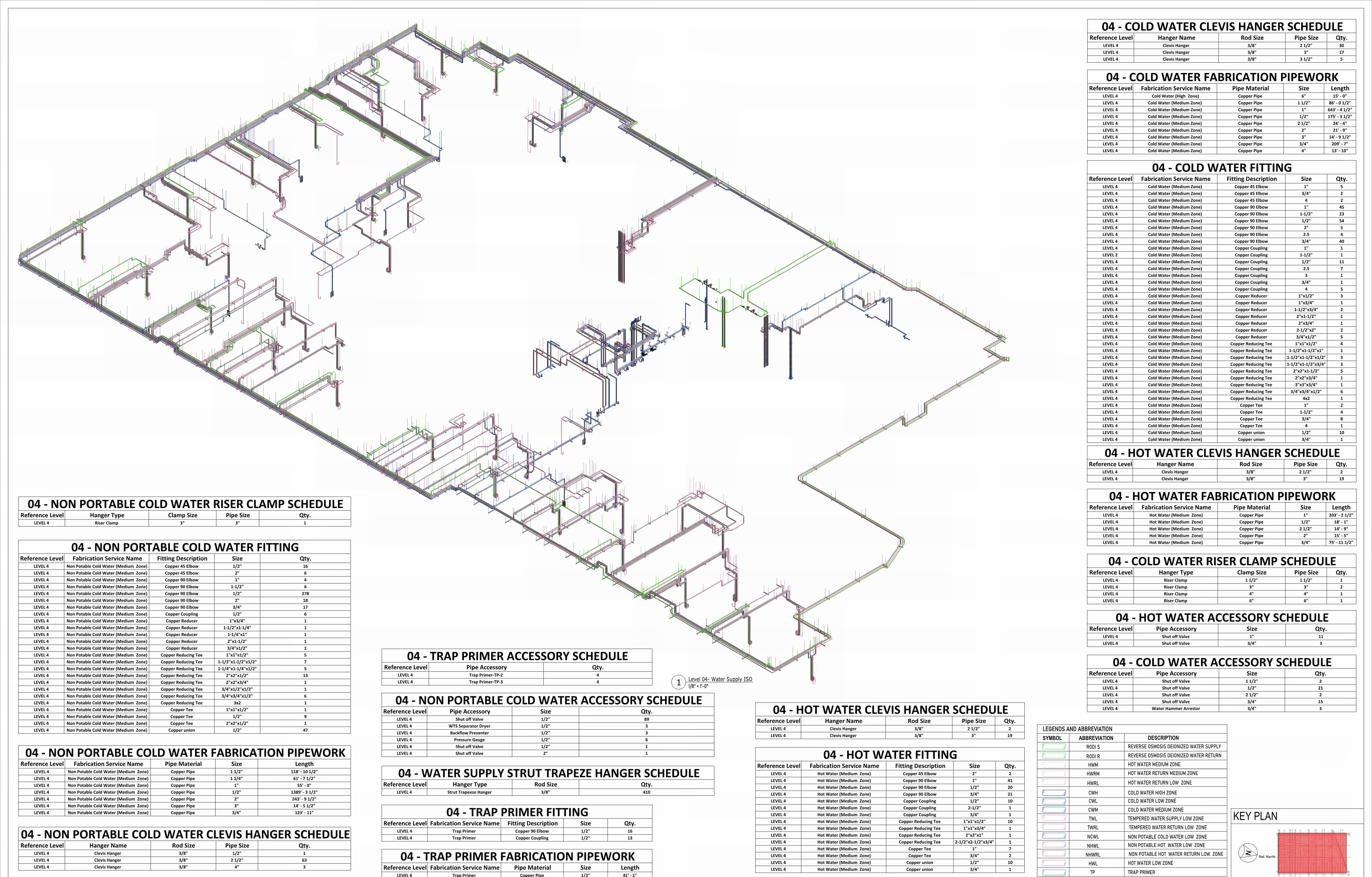

We create system-wise BOMs & quantity take-offs directly from the developed coordinated model. Our outputs incorporate itemized lists of pipes, ducts, fittings, valves, electrical fixtures, cable trays, conduits, sprinklers, supports, and accessories. To ensure zero duplication or missing items, every quantity is extracted using automated and manually verified workflows.
These accurate BOMs support procurement planning, cost estimation, fabrication ordering, and warehouse management. With real-time updates, contractors always can access to reliable quantities at every stage of the project, improving budget control & reducing material waste.
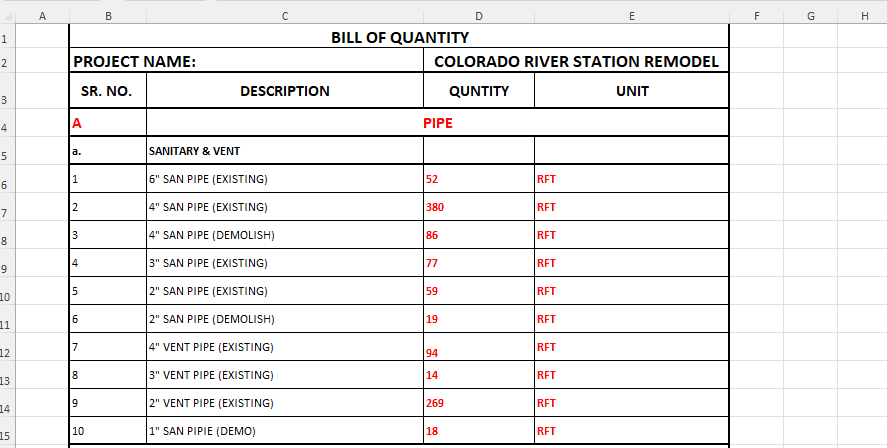

In our high-quality MEP family creation service, we provide parameter-rich Revit families for mechanical, electrical, plumbing, and fire protection components. Our every family is created to manufacturer specifications with accurate geometry, connectors, performance data, and MEP parameters, whether it’s HVAC units, pumps, valves, fittings, fixtures, panels, switchgear, lights, or specialized equipment.
Our custom content ensures seamless functionality, improved coordination & supports automated schedules, BOM generation, and system analysis. With our standardized families, our goal is to help MEP teams improve efficiency at every stage of the project.
.webp)
%20(2).avif)
%20(1).png)
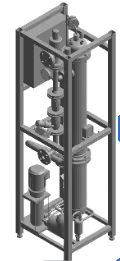
Our MEP Record Tracking Sheets service offers a structured way to monitor the progress and status of all coordinated elements, fabrication components, and installation activities. RTS documents track approvals, material submissions, RFIs, drawing releases, inspection stages, and installation completion for each MEP system, giving teams full visibility into project progress.
Integrated with BIM workflows, our RTS sheets link each item to model elements, drawings, and fabrication spools, making tracking efficient and error-free. This improves communication, streamlines QA/QC processes, and ensures that project stakeholders have accurate, real-time information throughout construction.
%20(1).avif)
%20(1).avif)
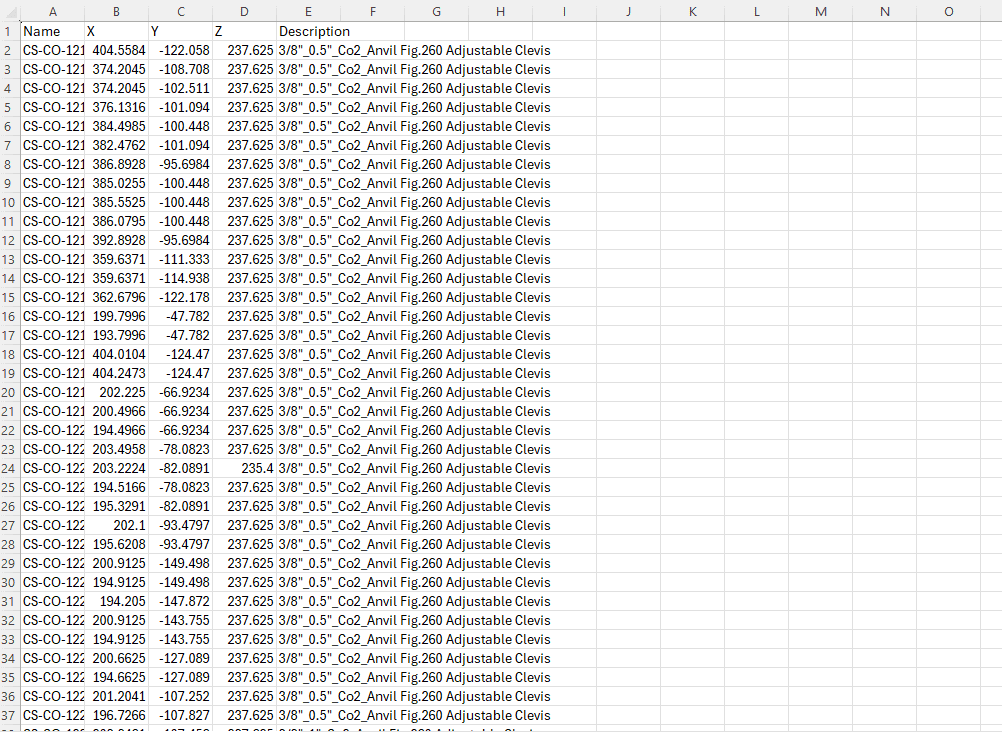
The shop drawings are generated using 3D BIM Models and hence are consistent with no scope of manual errors. If there are any updates to the model, the plans, sections, details and schedules all update in real time, ensuring correct data in every construction document.
The shop drawing process creation can be automated for a lot of disciplines, ensuring that all the outputs are generated extremely fast and according to a set of defined rules and standards.
Since we build virtual, we put in a lot of thought into value engineering and planning into how costs, delays and wastage can be reduced. Use of BIM based shop drawing workflows encourages off-site and prefab construction which also contributes to a more sustainable project.
Faster Installation
Speed up on-site installation with pre-engineered, ready-to-fit modular MEP assemblies.
Cost Savings
Reduce labor costs and material wastage with accurate quantity take-offs and off-site manufacturing.
Fewer On-Site Clashes
Fully coordinated BIM models eliminate costly rework and delays during construction.
Better Quality Control
Fabricate under controlled factory conditions, ensuring consistent quality and compliance with standards.
Explore Techture’s global project portfolio, showcasing a decade of expertise in delivering high-quality Building Information Modeling (BIM) services for the AEC industry.
Trusted, Reliable, and Committed
Would you like to know more about our BIM and VDC Services & Solutions? Our Consultants and Engineers will be happy to help you.
Hear directly from our pleased clients about how our BIM solutions and Virtual Design and Construction (VDC) services transformed their project management strategy. These success stories demonstrate Techture's BIM/VDC Consulting Services that improve productivity, accuracy, and overall construction project success.


We have been consistently impressed with the level of dedication and professionalism demonstrated by TECHTURE. Their team goes above and beyond to ensure that every detail is taken care of, and their commitment to excellence is evident in every interaction. They truly understand the importance of customer satisfaction and work tirelessly to exceed expectations. I highly recommend TECHTURE for anyone seeking top-notch service.
Our experience with Techture was a great experience! They meet our needs in a professional manner with constant communication along the way. The quality of their work and the timeframe in which they delivered drawings to us, kept us ahead of schedule.
Techture has been an invaluable partner in supporting our drafting requirements for commercial interior design projects. Their team consistently demonstrates excellent communication skills, ensuring seamless collaboration & alignment with our project goals. They have adopted our standards & methods with precision & shown great adaptability. Most importantly, they deliver without fail within the committed time frame, making them a reliable & trusted extension. We highly recommend their services.
We’ve had a great experience working with Techture, supporting our retail projects with 3D modeling from scans, 2D drawings, and CD sets. Their team has been very good to collaborate with, and we look forward to continuing our partnership.
Techture has become an indispensable business partner when BIM modeling and co-ordination is needed for our electrical projects. Their expertise in BIM modeling & co-ordination has allowed us to install our systems with greater accuracy and ease. The willingness of their employees to work with our rapidly changing schedule has made them our go-to BIM contractor.
We had a good experience working with Techture. Starting from our first project with Techture, to detail a new product with non-standard details, Techture was able to meet our all projects deadlines, understand our scope and adapt the product and use cases. The communication was effortless and the project managers were very attentive.
Techture was parachuted into our first project together not long before we were to submit for building permit. They brought in their hard-working team and completed permit drawings on schedule. From there, our professional relationship has grown to several projects over three disciplines. Their flexible, hard-working, and service oriented nature makes working with them easy. Their BIM & VDC coordination results in serious construction savings.
The construction-technology landscape is always changing, and Techture is a partner we can count on to help us adapt and continue our growth. Their innovative BIM & VDC solutions and dedicated support have enhanced our operational efficiency. We highly recommend Techture’s BIM and VDC services for their expertise and commitment to excellence.
It was a pleasure to work with Techture on this remarkable & challenging project (Expo2020 Water Feature), we worked as a team to deliver this fast track project within a limited time, facing several unexpected surprises & challenges to resolve and Techture gave their best to execute the works in timely & professional manner.
Techture's BIM expertise helped us deliver our project in a stringent timeline of 4 months where the LOD 300 model was to be created from CAD drawings. The team of BIM professionals and their understanding of design helped us submit a clash free design BIM model to the client with the desired level of detail.
The attention to detail and quality of the architectural models that Techture does is really very good. We like to work with companies who have a high focus on delivering good quality, and that is where Techture is always on point.








Connect with us to Streamline your construction process, reduce costs, and improve project efficiency with our expert-driven BIM & VDC solutions. To ensure seamless coordination, minimizing errors and delays, we help you to optimize workflows and maximize project success.

MEP prefabrication requires that the BIM be created to LOD 400, which includes information such as dimensions, connection information, supports, etc. This is considered fabrication-level information, which is necessary for manufacturing. The more detailed information in BIM can also be used for spool drawings, fabrication layouts, quantity takeoffs, etc. This information is necessary so that no conflicts will be encountered when prefabricated components are installed in the field.
Some of the MEP systems that are best suited for prefabrication include HVAC ducting, piping, electrical conduit racks, cable trays, and modular plant room installations. Our team examines the project layout, design complexity, and site constraints to identify the best approach for prefabrication. BIM-based coordination can assist in identifying repetitive modules and assemblies that can be prefabricated, which can be beneficial for increased efficiency, installation speed, and quality control.
MEP prefabrication also reduces project risk as a major part of the project is completed off-site in a controlled environment. Conflicts are resolved during the design process using coordinated BIM models and fabrication drawings, thereby reducing the risk of modifications, errors, and delays during the construction process. The benefits of the prefabrication method include increased safety, quality control, and project schedules.
Yes, prefabrication drawings are generally developed to fabrication details so that they can be utilized directly by the fabrication shops. These drawings contain information such as dimensions, spools, connections, etc., that are required for the manufacturing process. These drawings are very accurate if developed from a coordinated BIM model. This minimizes the requirement for redraws and helps in the manufacturing and installation process.
The process of managing changes to the design after the start of prefabrication is done through a change management and model update process. Changes to the design are reviewed by our internal team of experts, and the impact of the change is evaluated for the prefabricated components. Updated fabrication drawings and coordination are sent to ensure the designs are up to date.


.png)


.webp)

.avif)

.webp)
.webp)


