.png)

Over the past few years, the construction sector has experienced a significant digital transformation. One of the most influential tools that drove this change is the Common Data Environment (CDE), which combines all project-related data, documentation, and communication within a single platform. This establishes a single source for all stakeholders. This centralization enables clients to minimize errors, enhance coordination, and streamline project delivery across all phases of construction.
This article is your complete guide to the Common Data Environment (CDE). We'll cover all the crucial aspects like its key features, benefits, practical tactics for successful implementation, the top software available, and how it's actually making a difference in real-world construction projects.
What is a Common Data Environment (CDE) in Construction?
A Common Data Environment (CDE) is a centralized platform where all project information is collected and managed. Prior CDE was mainly used to store BIM data, but now it covers materials, contracts, estimates, reports, specifications, and other documents crucial for a project’s design and construction. In other words, a CDE is a centralized hub that is accessed by every stakeholder. It helps to keep information organized and ensures that architects, engineers, contractors, and owners are always looking at the same data.
CDEs are particularly useful for large, complex projects, such as highways, bridges, or multi-story buildings, where multiple teams are engaged, necessitating the dissemination of substantial information. By giving everyone access to real-time updates, a CDE reduces errors, improves collaboration, and makes decision-making faster and more reliable.
The Common Data Environment effectively resolves the chaos of scattered information by providing a single, reliable repository for all key project documentation, including:
- Project drawings
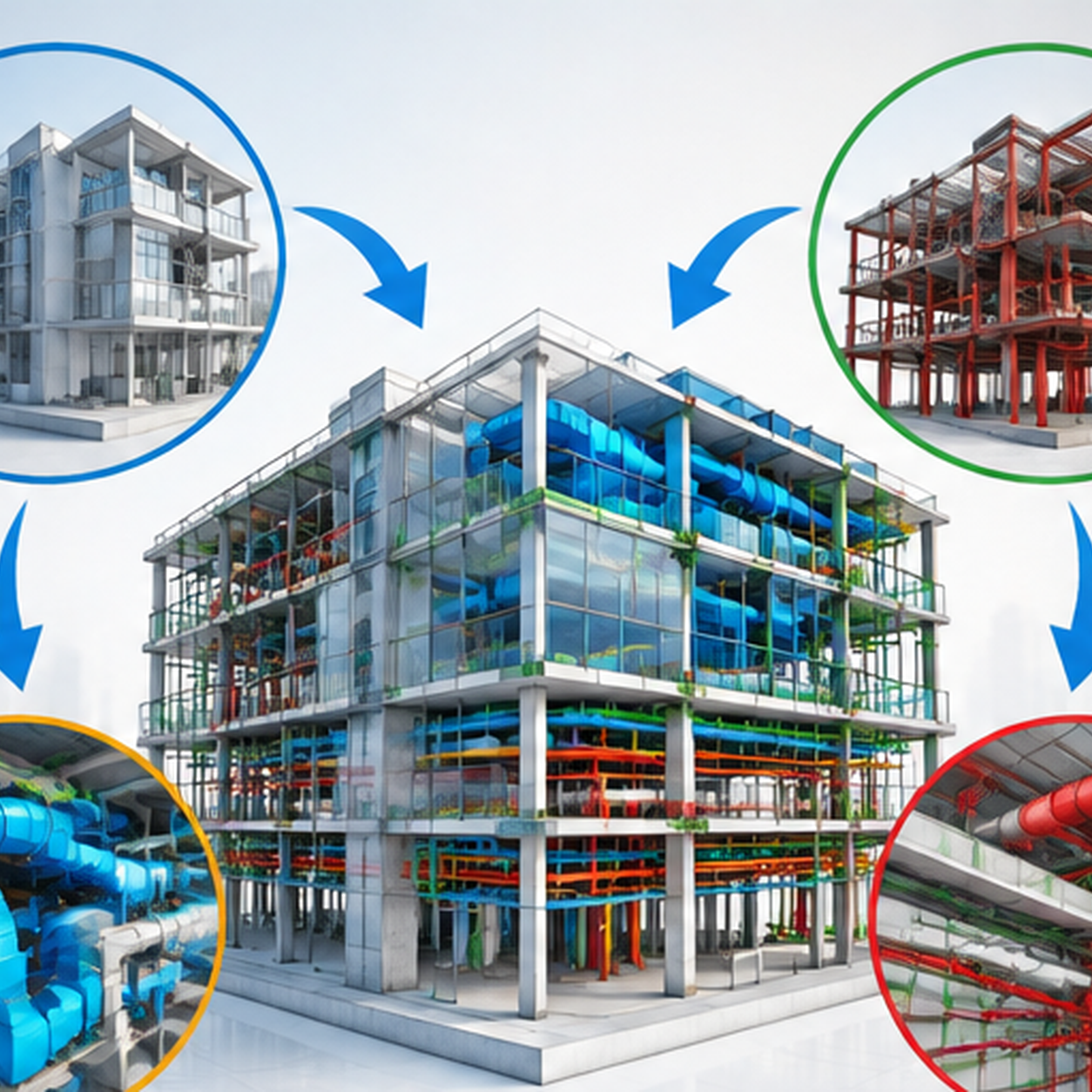
- Project models (BIM)
- Design documents
- All specifications
- Contracts
- Legal documents
- Communication logs
- Meeting notes
Key Features of a Common Data Environment
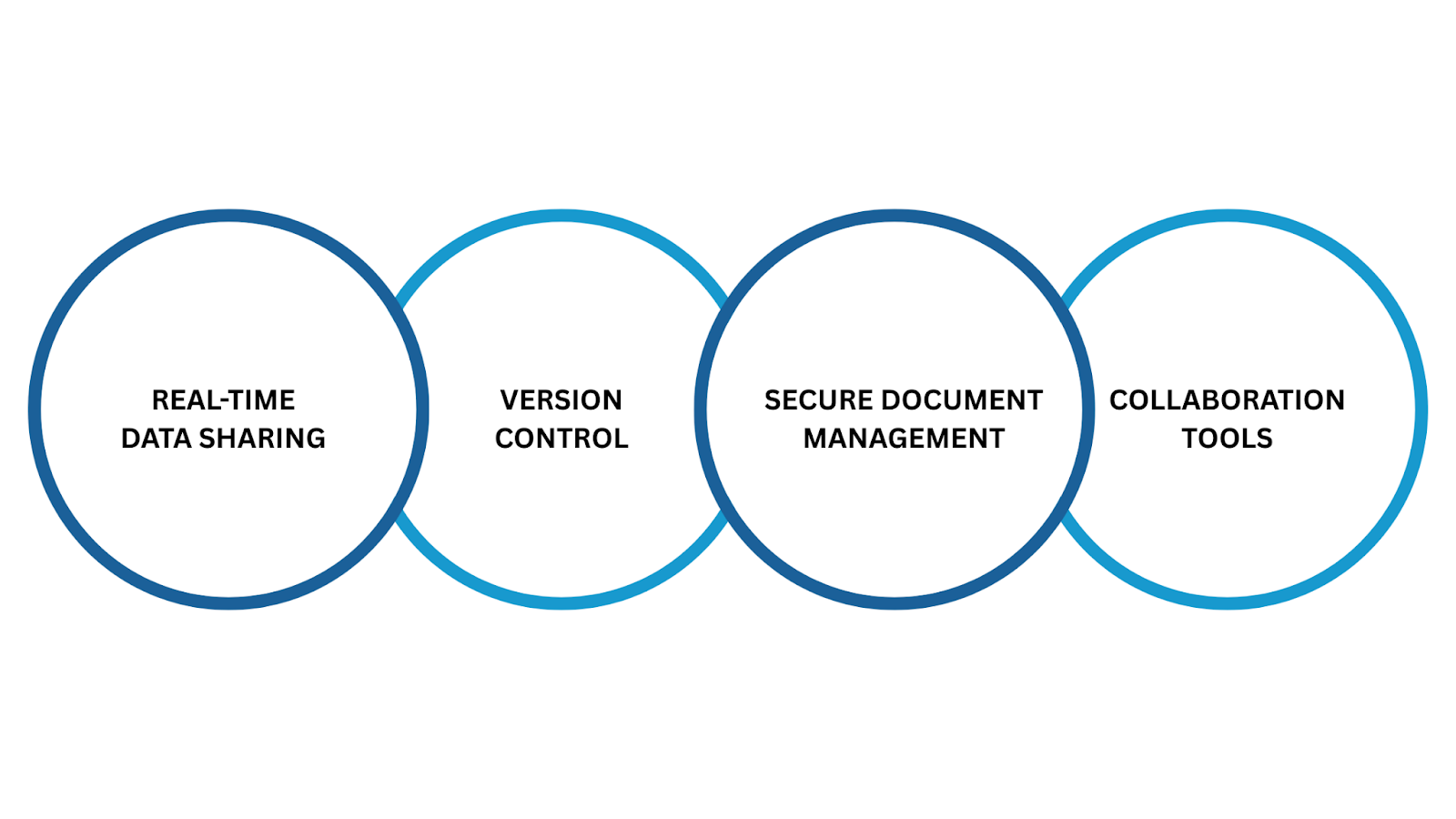
Real-time data sharing: This is one of the best key benefits of CDE, ensuring everyone is always working from the latest version of any document or model.
Version control: Teams often get confused between the versions & changes made during auditing, CDE enables accessing the previous version without worrying or hampering the design.
Secure document management: Data privacy is a major problem companies face; through advanced encryption, only authorized people can view or modify the model or documents.
Collaboration tools: You can turn documents into an active workspace & make teams communicate and coordinate efficiently with the help of comments, markups, task assignments, and more.
Benefits of Using a Common Data Environment in Construction
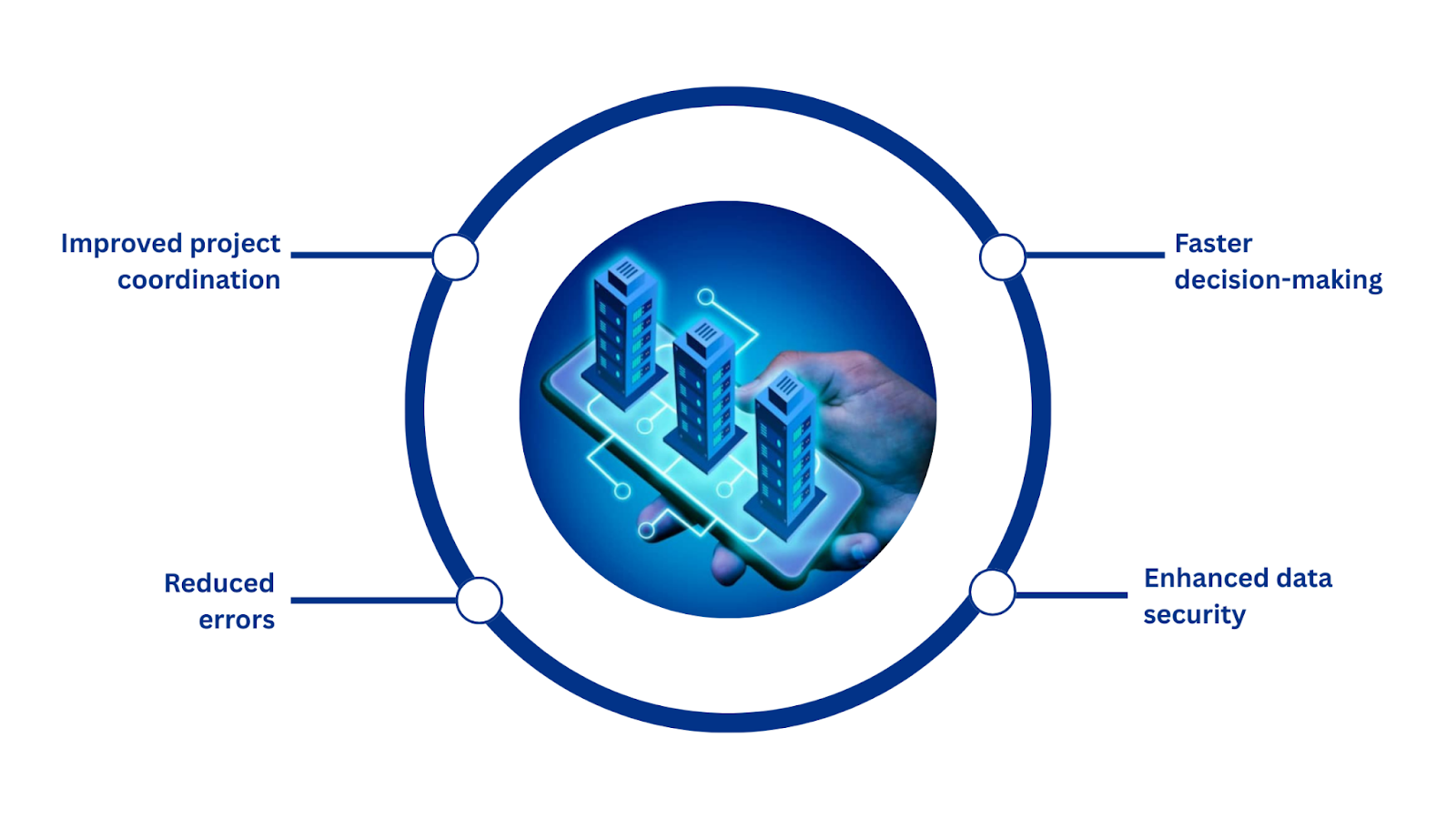
- Improved project coordination: A centralized platform minimizes misunderstandings and guarantees that all teams are in sync.
- Reduced errors: Costly errors are avoided using proper version control and a real-time data sharing platform.
- Faster decision-making: Based on the cloud sharing the stakeholders have access to relevant data quickly, helping them accelerate approvals and timelines.
- Enhanced data security: With the supervise access feature, CDEs help you reduce the risk of data leaks and edits.
How a Common Data Environment Improves Collaboration in Construction Projects
It is rightly said that the key to successful construction is teamwork. A CDE enhances collaboration by providing a single source of truth and guaranteeing that all stakeholders are working with the same verified information.
Key collaboration benefits include:
Transparency: The most recent designs, documentation, and project updates are visible to all.
Consistent Information Flow: Reduces misunderstandings caused by unorganized & fragmented data.
Enhanced Communication: Teams can communicate, share thoughts, annotate drawings, add comments, and collect feedback directly within the platform.
Remote Access: With the help of cloud collaboration, project teams can connect & collaborate from different locations, supporting remote or hybrid work to increase convenience.
With a CDE, connecting with all the other stakeholders becomes structured, transparent, and efficient, ultimately resulting in fewer delays and better & faster project delivery.
Implementing a Common Data Environment in Construction Projects
As we discussed, key features of a CDE can't be achieved without properly implementing one. To implement CDE, you actually require careful planning & adoption strategies.
Here are step-by-step instructions for the proper installation of CDE:
- Choose the Right Platform: Choose a CDE solution that works with the BIM and project management software you already have.
- Define Data Management Protocols: Giving proper naming conventions, folder structures & approval workflows helps you structure the data management.
- Train Project Teams: It is very important that all the team members are familiar with the CED and understand how to use it effectively.
- Integrate with Other Tools: Ensure compatibility with BIM software, ERP systems, and communication tools.
- Monitor and Maintain: To ensure data integrity and platform efficiency, it requires regular mandatory audits and updates.
This structured approach helps you with a smooth transition from traditional data management to a centralized digital environment.
Common Data Environment vs. Traditional Project Data Management
To help you with a better understanding, here is a set of parameters discussed to provide you with a clear understanding and difference between the traditional project data management and the common data environment (CDE).
Software Solutions for a Common Data Environment in Construction
Here is an overview of popular software tools that offer various integrations, scalability, and features used to create and manage a CDE in the construction process:
- Procore: It is a cloud-based platform providing project management, document control, and collaboration features.
- Aconex (Oracle): Offers secure information transmission, workflow automation, and strong document management.
- Autodesk BIM 360: It is one of the best as it integrates BIM workflows with document management and cloud-based collaboration tools.
- Newforma: This platform helps you focus on project information management, RFI tracking, and drawing distribution.
Challenges of Implementing a Common Data Environment in Construction
Till now, we have discussed various aspects of CDE; despite all its benefits, adopting a CDE can be a bit challenging. If you address these challenges with great planning, you can implement CDE perfectly in the construction project.
Here is the list of challenges faced while implementing CDE:
- Resistance to Change: The seniors working in the AEC industry might be hesitant to adopt new digital workflows.
- Software Compatibility: Teams that are skilled in certain software & tools may need to be integrated smoothly with the chosen CDE; other wise it may create trouble.
- Initial Investment: The setup & subscription of a CDE requires a high cost at the start.
- Data Security Concerns: All the sensitive project information and data are protected with strict protocols.
- Training Needs: It is mandatory that the team members receive adequate training to use every benefit of the platform.
Real-World Examples of CDE in Construction Projects
Here are some examples of how CDE adoption improves efficiency, accountability, and collaboration across different projects:
- High-Rise Buildings: Cloud-based design environment (CDE) platforms facilitated efficient management of design revisions across various disciplines for large construction firms, thereby mitigating coordination errors and project delays.
- Infrastructure Projects: CDEs are utilized in large infrastructure projects to centralize contracts, drawings, and inspection reports, helping teams increase audit readiness and openness.
- Industrial Facilities: The combination of CDE & BIM provides real-time clash detection & coordination, helping reduce costly rework and establish better collaboration and communication.
The Future of Common Data Environments in Construction
With the upcoming trends & emerging construction technologies, CDE will become central, smarter, and more efficient in project delivery.
Some of the predictable outcomes are:
- Cloud-Based Platforms: Ensuring secure, scalable, and accessible data management.
- AI and Automation: Will help automate the data validation, clash detection, and provide teams with predictive analytics to make more accurate, informed decisions.
- Digital Twins: If the CDEs and digital twin combine, it will provide teams with real-time monitoring and simulation that will help you reduce delay and costly rework.
- IoT Integration: With the help of IOT integration, the CDE may receive real-time sensor data for operational insights.
Best Practices for Managing a Common Data Environment
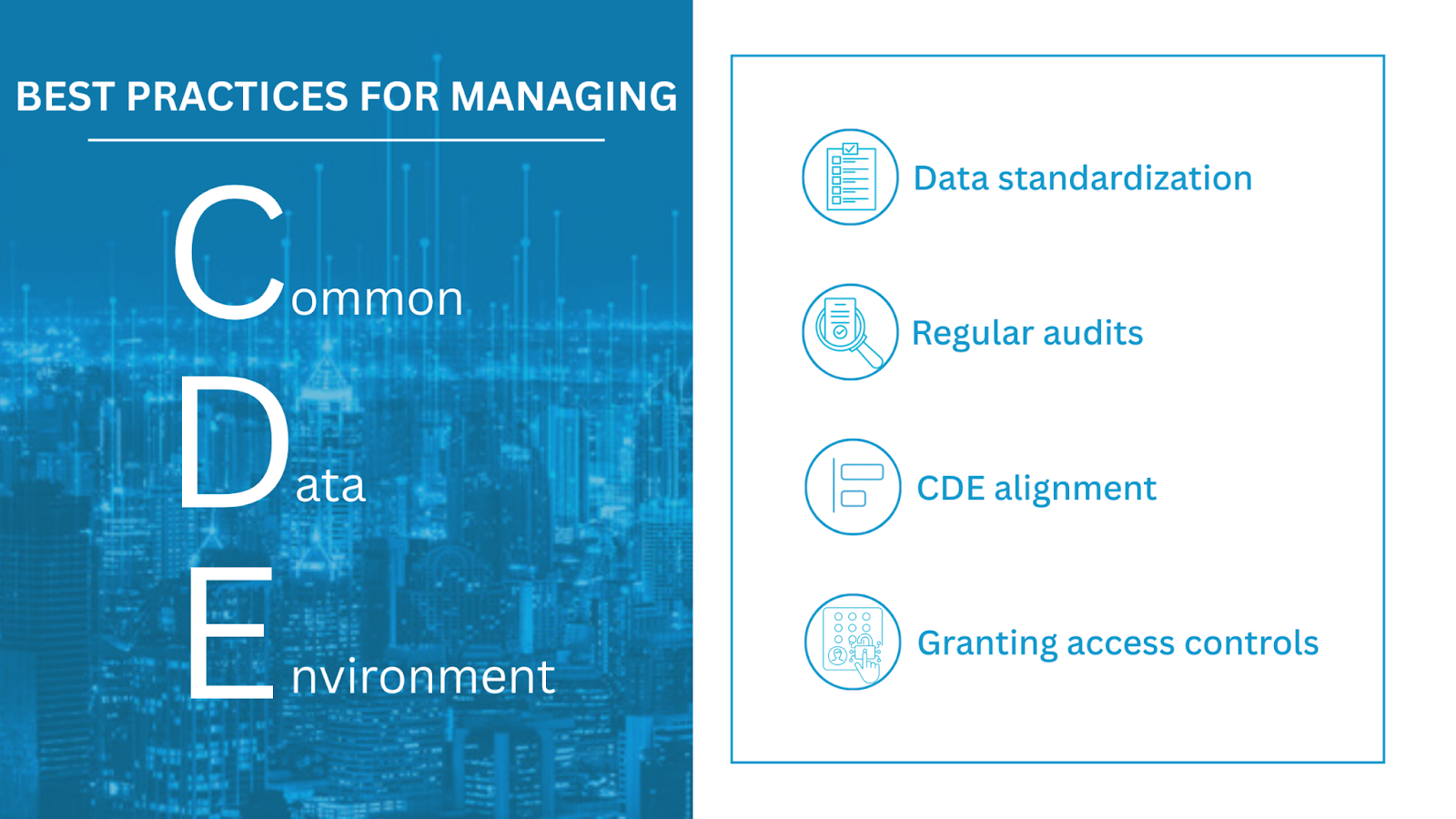
To make sure CDE remains organized, secure, and fully functional throughout the project, here are some practical tips and best practices for maintaining and managing a CDE.
- Data standardization: properly naming file and folder structures.
- Regular audits: Conducting timely audits ensures that all the project data is integrated.
- Granting access controls: Providing role-based access will maintain data integrity & help secure sensitive information.
- CDE alignment: Common data environment along with the existing goals & timelines, benefits you with better project execution.
Conclusion: The Role of Common Data Environment in Modernizing Construction
This article provides a deep understanding of the Common Data Environment, covering all the important information, such as features, key benefits, challenges, future best practices, and more, required to implement in your project. In today's AEC world, the CDE (Common Data Environment) in construction is no longer optional; it has become an essential part of modern, digitally-driven projects. Providing a centralized platform to access data from any part of the world while ensuring data security and convenience.
FAQs:
1. What is the purpose of a Common Data Environment (CDE) in construction?
To provide a centralized source of information about the project, ensuring every stakeholder can access the model/document from any part of the world.
2. How does a CDE improve collaboration among construction teams?
CDE improves collaboration among construction teams by providing a cloud-based single source of truth.
3. Can a Common Data Environment help reduce construction project delays?
Yes, CDE helps you reduce construction delay by establishing transparency among stakeholders through a real-time updated model.
4. What software is used to implement a Common Data Environment in construction?
Procore, Aconex, Autodesk BIM 360, and Newforma are some of the popular software used to implement CDE in construction.
5. What are the challenges of using a Common Data Environment in construction?
Resistance to Change, software compatibility, initial investment, data security concerns, and training needs are some of the major challenges.
6. How does a CDE ensure data security in construction projects?
By offering role-based access, encryption, and audit trails, CDE provides Data security in the construction process.