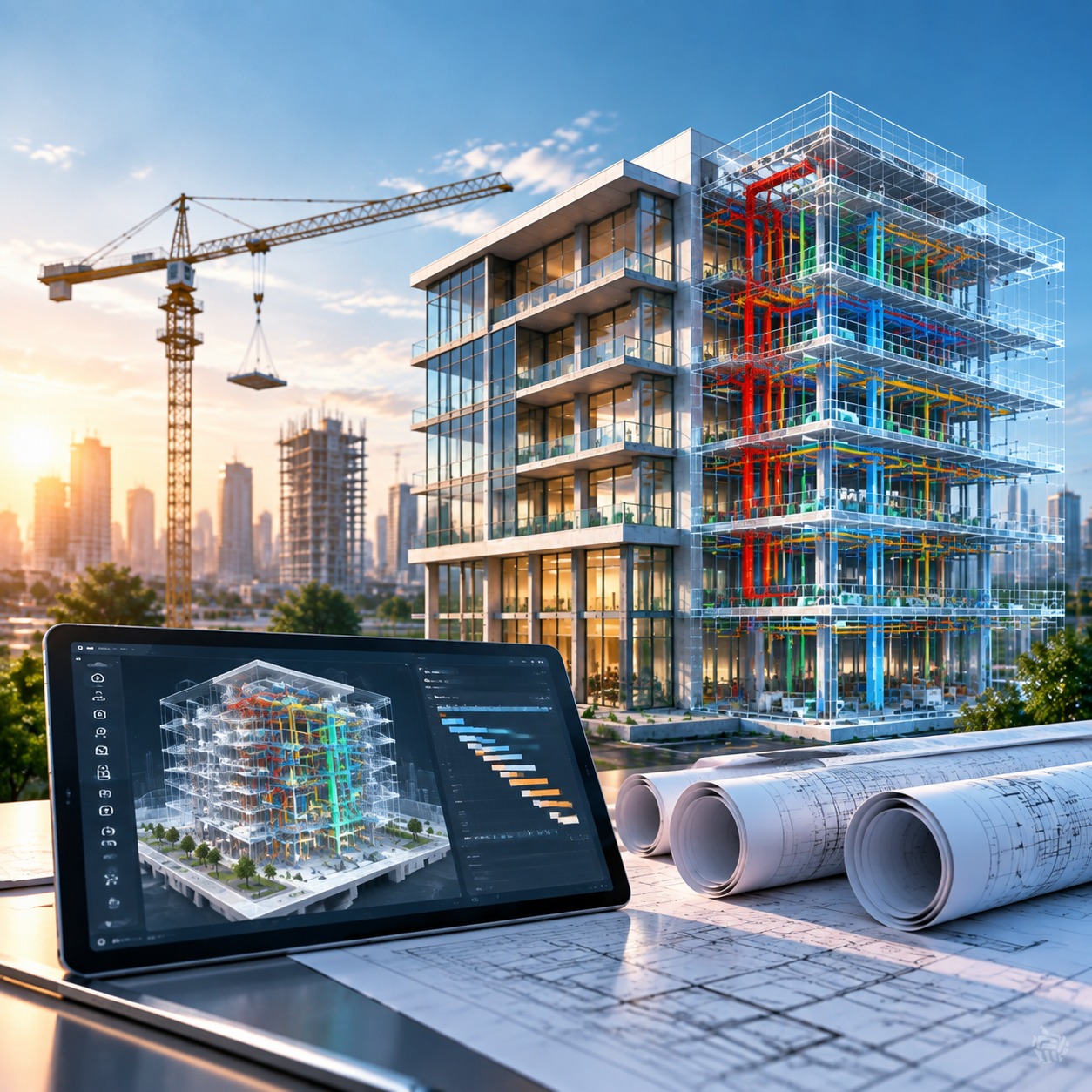
The drafting of building plans has experienced one of the biggest paradigm shifts in the history of architecture and construction. While the process of drafting building plans was dependent on manual sketching and drawing boards, it has now transformed into an intelligent process, thanks to the advent of Building Information Modelling (BIM).
BIM is more than just a 3D modeling software. It is a collaborative digital process that generates a common, data-rich model of a building that combines geometry, materials, performance, and scheduling and provides a single digital environment. Rather than generating separate drawings, professionals now work together to create coordinated digital objects that inform projects from concept through construction and even into facility management.
The 2D drafting process was limited to visualization. With BIM, the intelligent modeling process has arrived, where each wall, beam, pipe, or door has associated information that is automatically updated in drawings, schedules, and documents.
With the construction industry being subjected to growing demands to complete projects more quickly, sustainably, and with fewer mistakes, BIM has come to be the building block for the future. In this article, we will examine how BIM is changing & will change the face of drafting building plans, and why it has become a necessity for the future of construction.
However, in real-world project settings, drafting is not an activity that is conducted in isolation, following the making of decisions regarding project designs. In BIM, drafting is conducted earlier in the process, in comparison to traditional settings, to ensure that coordination, constructability, and inter-professional interactions have a direct impact on drafting.
What is BIM Drafting for Building Plans?
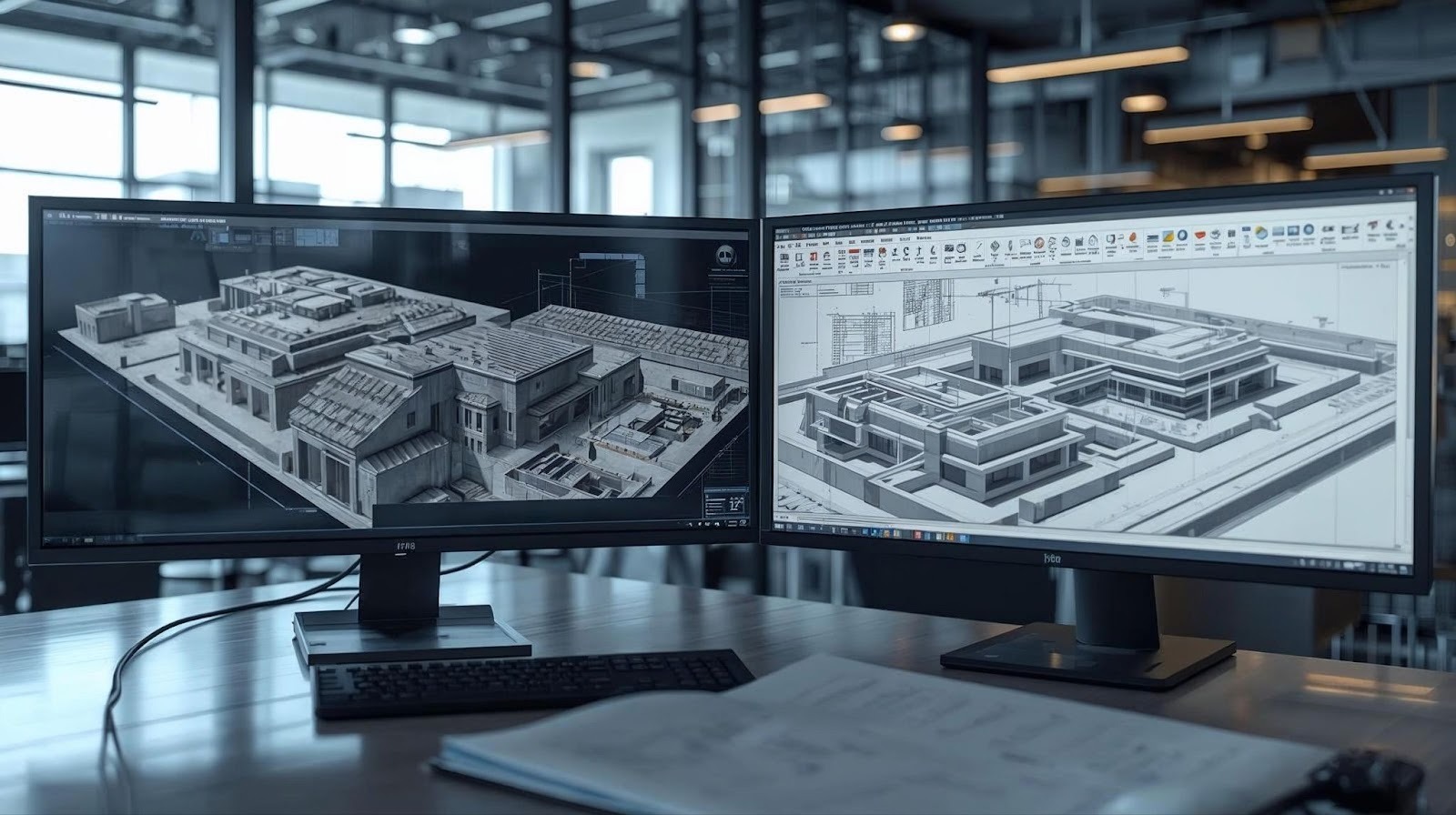
The process of BIM drafting building plans includes “the process of generating coordinated construction documents by using digital, intelligent 3D models. These models automatically generate and update drawings, schedules, and project data specific to the project with high degrees of accuracy.
The Evolution of Drafting Building Plans
From Drawing Boards to Digital Intelligence
The process of drafting building plans is a technological transformation that mirrors the overall development of the AEC (Architecture, Engineering, and Construction) sector.
1. Manual Drafting Era (Pre-1960s-1980s)
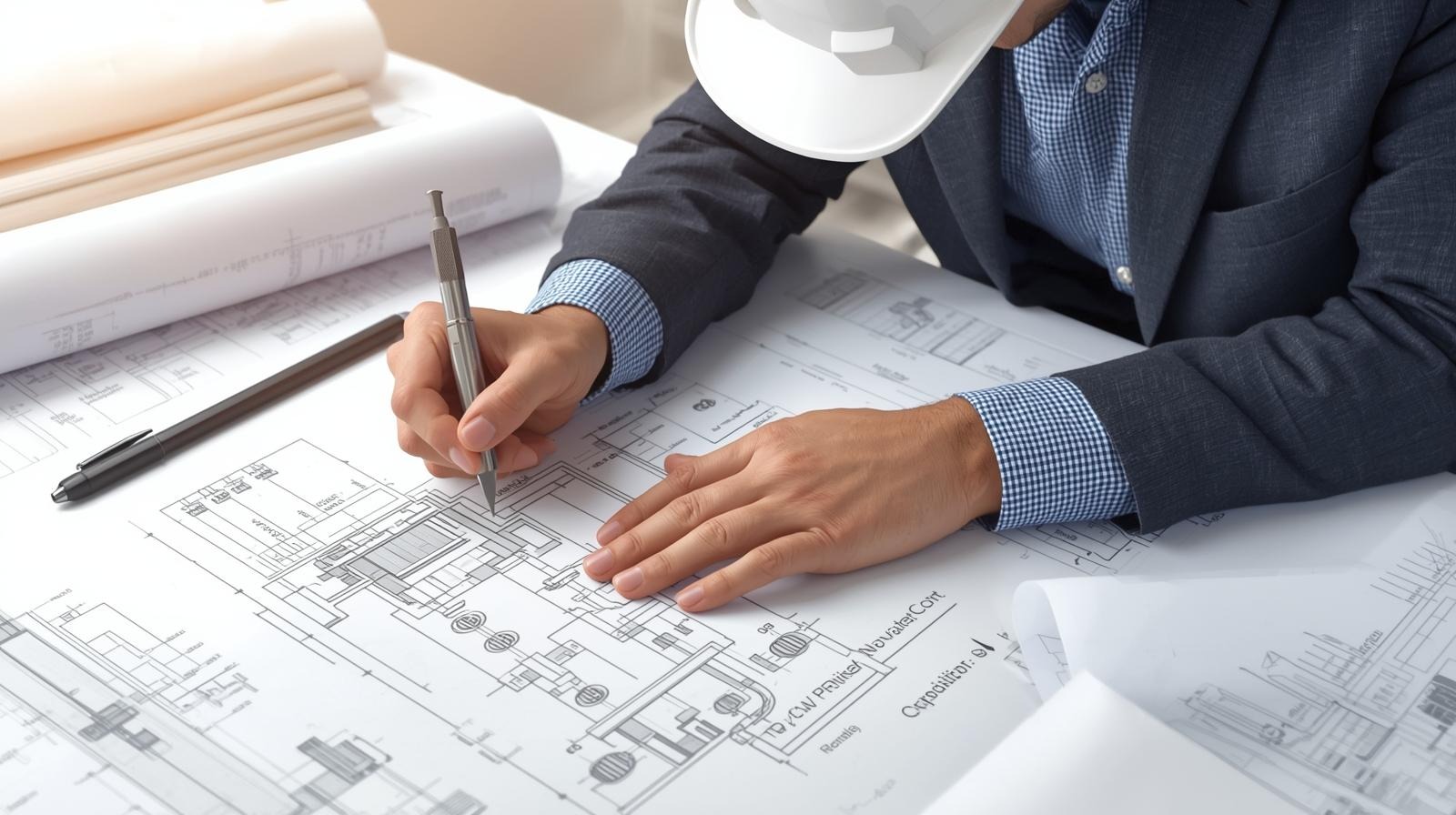
Traditionally, architects and engineers used manual drafting techniques that involved using pencils, scales, and drafting boards. Although the work was very detailed, it was time-consuming and error-prone. When a modification was needed, the entire page had to be redrawn, which was costly and time-consuming.
2. CAD (Computer-Aided Design) Revolution (1970s/80s-Present)
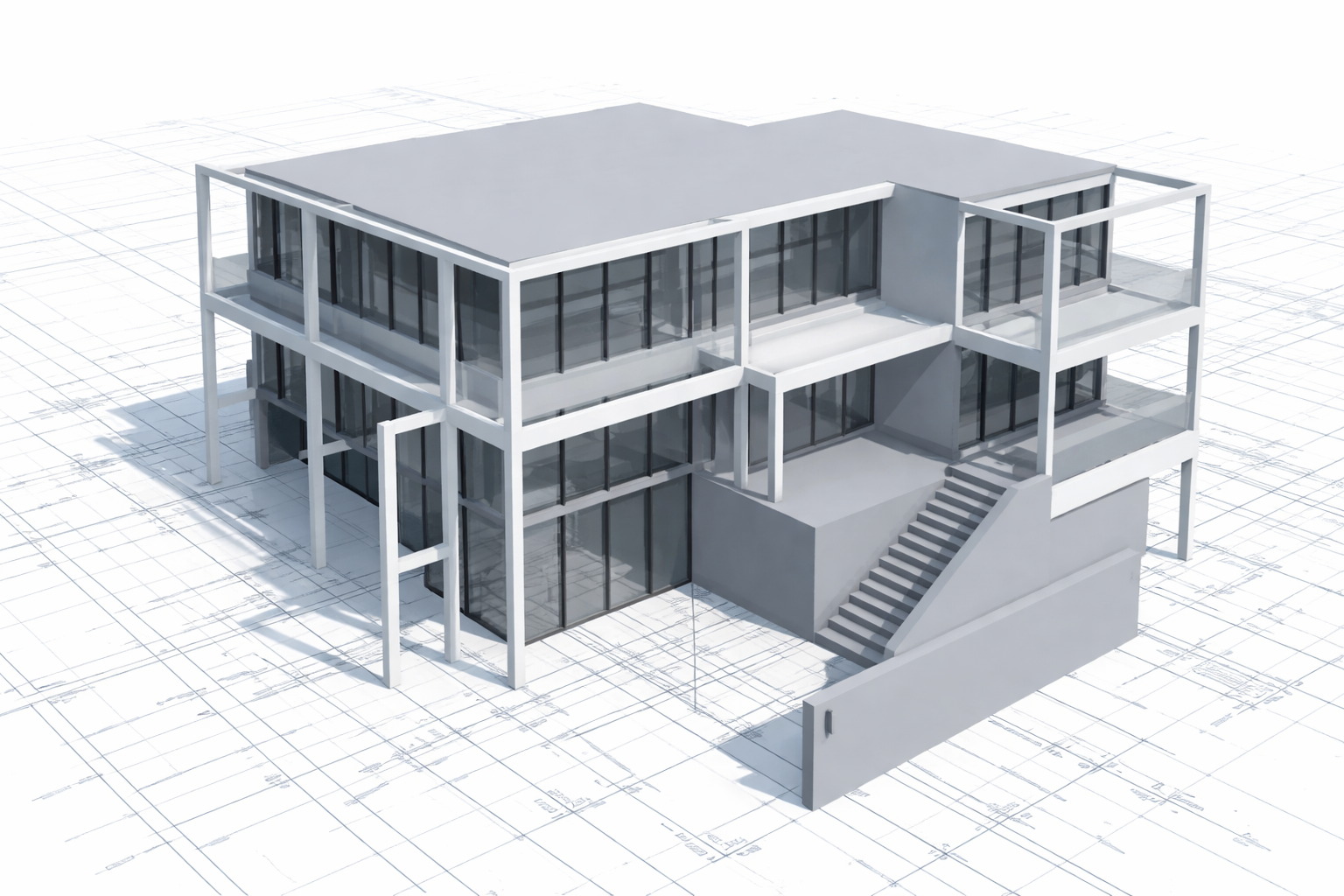
The computer-aided design (CAD) brought about the first revolution in drafting, making it faster & more accurate as compared to manual drafting. It became easier to modify designs, copy details, and keep track of documentation. However, CAD systems were essentially an electronic version of manual drafting. The design was still largely unconnected.
As a result, the architectural, structural, and MEP groups often developed their respective sets of drawings. Because the design integration of these drawings had not occurred early on, coordination issues did not become apparent until the construction phase on the site, rather than during the design phase. This pattern has the advantage of reducing costly rework by lowering the potential for late-stage discoveries that can create problems during construction.
3. BIM Transformation (2000s-Present)

BIM brought about a radical change. Rather than drafting lines, people have started modeling actual building elements. Building plans, sections, and elevations, as well as building schedules, are now automatically generated from a single integrated model.
Challenges in Traditional Drafting
In the pre-BIM era, the following problems were common in projects:
- There were frequent design discrepancies between disciplines.
- There was high rework due to design changes at the end of the project.
- There was limited collaboration between architects, engineers, and contractors.
- There was poor visualization for stakeholders.
- There were time-consuming coordination processes.
With the increasing complexity of construction projects, the construction industry required an upgrade, which would link information, people, and processes. BIM was the answer to this problem.
How BIM Is Transforming the Drafting Process
BIM revolutionizes the way teams produce building plans, moving the drafting process from a documentation phase to an integrated design process.
Step-by-Step BIM Drafting Process
1. Intelligent Model Development
Designers start by developing a 3D model with parametric elements. Every element contains information like size, material, and performance attributes.
2. Automatic Drawing Generation
Rather than manually creating drawings of multiple views, BIM automatically creates plans, sections, and elevations from the central model.
3. Real-Time Updates
A modification in one view automatically updates all drawings, schedules, and documents, thereby avoiding inconsistencies.
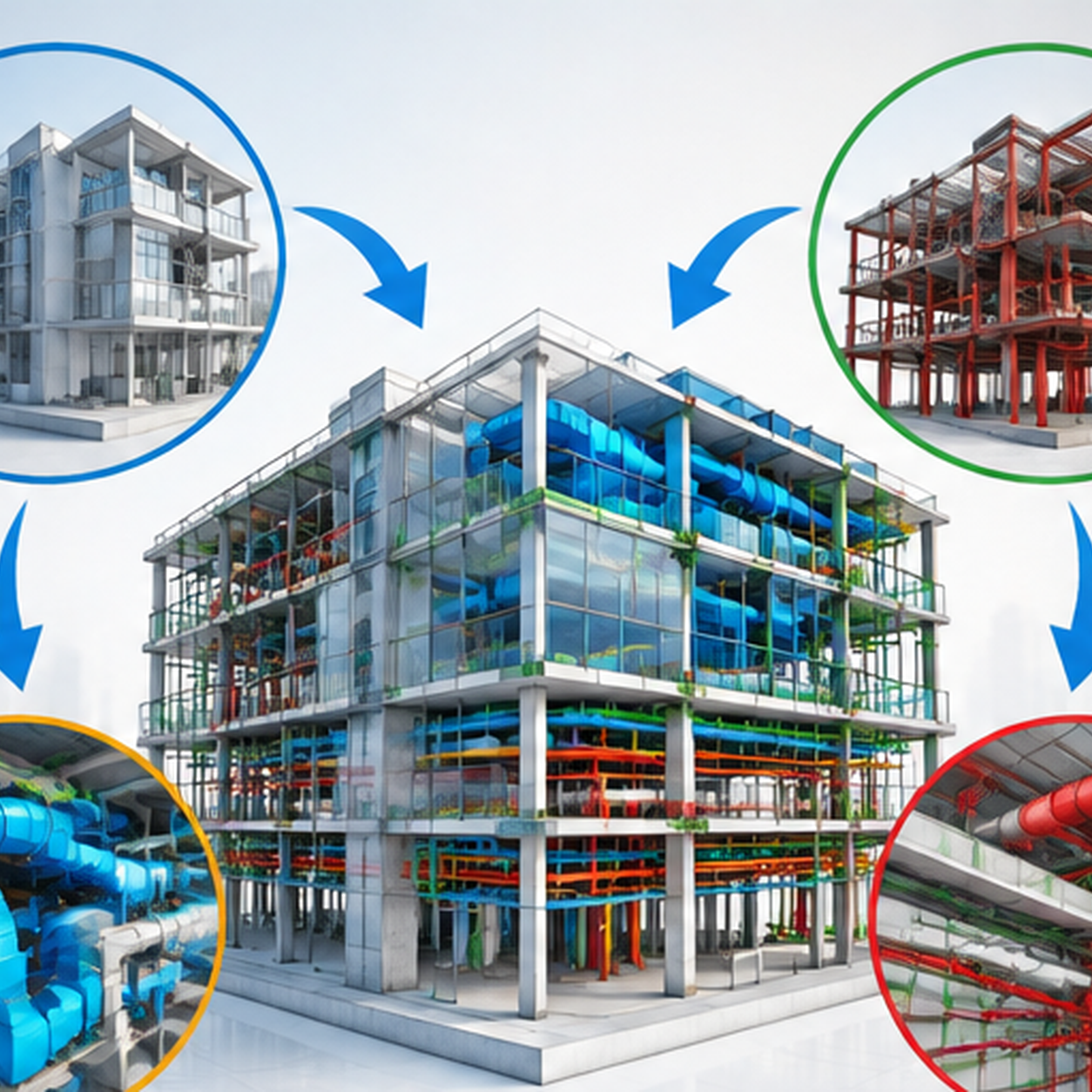
4. Coordination and Clash Detection
The structural, architectural, and MEP models are integrated into a federated model where clashes are identified earlier, thus eliminating costly site conflicts.
Within the process of federating models, coordination teams can find hundreds of soft and hard clashes between disciplines. These are issues that normally do not occur when models are developed in isolation. By addressing these clashes digitally, it is possible to minimize the amount of work that is required on-site.
Integration of 3D and 4D Modeling
BIM enhances drafting by going beyond geometry:
- 3D BIM enhances visualization and understanding of space.
- 4D BIM links scheduling information, allowing construction sequences to be modeled in time.
- This enables project participants to predict construction difficulties before they happen on site.
Collaborative Drafting
Unlike traditional drafting processes, BIM allows different participants to work on the same model at the same time. Architects, engineers, contractors, and owners can view and edit the same model, ensuring consistency throughout the project lifecycle.
This enables a much faster, more coordinated, and more reliable drafting process.
Key Benefits of Using BIM for Drafting Building Plans
- Increased Accuracy and Error Elimination
Accuracy is one of the most powerful benefits of BIM. Clash detection automatically detects conflicts between systems, such as where ducts cross beams, before any actual construction takes place. Since all drawings come from one source, errors are eliminated.
This eliminates RFIs, change orders, and expensive redesigns.
- Increased Collaboration Among Teams
Cloud-based BIM collaboration enables teams to work together, regardless of their location. Changes are automatically shared, so all team members are working with the latest version of the project model.
This collaborative process eliminates the silos that exist between disciplines.
- Improved Visualization for Clients
Clients often find it difficult to understand 2D drawings. BIM eliminates this problem by allowing clients to view realistic 3D images of the project.
Clients can:
- Walk through the space virtually
- Appreciate the scale and size of the space
- Offer feedback on the design at an early stage
- Time and Cost Efficiency
BIM enhances efficiency in the following ways:
- Automating documentation
- Less manual drafting work
- Early problem detection
- Optimized construction sequence
Projects are made more efficient with shorter project timelines and better cost estimation.
- Sustainable and Smart Building Designs
BIM makes sustainable designs possible by allowing performance analysis in the early design stages. The design team can analyze energy performance, daylighting, and material usage before actual construction work starts.
Real-World Applications of BIM in Drafting
The use of BIM has increased in commercial, residential, infrastructure, and institutional projects. Governments and large companies are now mandating BIM modeling and drafting services for better project delivery.
The major technology companies have accelerated this process. Companies such as Autodesk have developed integrated BIM solutions for coordinated workflows, while Graphisoft has developed collaborative architectural modeling solutions widely adopted globally. Infrastructure projects also extensively use solutions from Bentley Systems for digital delivery.
The common BIM tools used in drafting processes are:
- Revit for multidisciplinary modeling and drafting
- Archicad for architectural BIM modeling
- BIM 360 for cloud collaboration and coordination
BIM is used for accurate drafting, taking into account actual construction site conditions.
Challenges and Limitations of BIM Adoption
Despite the benefits, there are also challenges that come with BIM adoption, which organizations need to overcome.
- High Initial Investment
The cost of BIM software, hardware, and implementation may be high, particularly for small companies that are migrating from CAD systems.
- Training and Skill Development
BIM demands new skills that go beyond drafting, such as data management and coordination. Organizations need to invest in training and development initiatives.
- Compatibility and Data Sharing Issues
Multiple software systems are used in projects. Interoperability issues may arise when different software systems or formats are used, and organizations need to develop coordination strategies.
- Resistance to Change
Experienced drafters are used to traditional methods. Adopting BIM may seem like a disruption at first, and organizations may face resistance to change.
But most organizations find that the benefits of BIM adoption outweigh the initial difficulties.
The Future of Drafting with BIM
The development of BIM is still in its infancy. New technologies are pushing the boundaries of what drafting building plans can do.
AI-Driven Design and Automation

Artificial intelligence is now being used to automate drafting work, produce optimized designs, and assess designs’ performance instantly. This enables designers to concentrate on design and problem-solving.
AR and VR Integration

Augmented Reality (AR) and Virtual Reality (VR) enable project participants to take a virtual tour of the project before actual construction work starts.
Emergence of 5D and 6D BIM
- 5D BIM enables the integration of cost estimation into building models (that is, a 4D BIM model + Cost estimation).
- 6D BIM involves the integration of lifecycle and sustainability information for facility management.
Drafting is no longer just about creating drawings. It now provides a data platform for the entire building lifecycle.
BIM and Smart Cities
With the increasing trend of smart cities, BIM models will be integrated with digital twins and urban data systems to provide sustainable infrastructure planning and efficient city management.
Conclusion
BIM has completely changed the way professionals work on drafting building plans. What used to be a manual and disjointed process is now a collaborative and intelligent process that relies on real-time data and integrated modeling.
BIM has the ability to enable project teams to produce better quality work more efficiently. While implementing BIM can be a challenge due to technology and training costs, the benefits far outweigh the difficulties. With advancements in AI, automation, and smart technology, BIM is going to be the foundation of smart construction design.
The future of drafting is not about drawing lines; it is about building smarter, connected, and sustainable spaces.
FAQs
1. What is the main purpose of BIM in drafting building plans?
The fundamental purpose of Building Information Modeling (BIM) is to use intelligent building plans that may automatically generate drawings while at the same time ensuring greater accuracy and collaboration during the entire building’s lifecycle.
2. How is BIM different from traditional CAD drafting?
Conventional CAD drafting mainly focuses on the creation of drawings. On the other hand, BIM focuses on the development of intelligent building designs using 3D modeling while ensuring automatic generation of drawings and better collaboration.
3. Is BIM suitable for small architectural firms?
Yes. Although BIM involves greater initial costs, it helps small architectural companies increase their productivity and compete with other large and complex projects.
4. What skills are needed to work with BIM software?
Individuals should have modeling skills and knowledge of construction processes and coordination. They should also have experience working in collaborative environments.
5. How does BIM improve accuracy in construction documentation?
All drawings created using BIM come from one single intelligent building design. As such, any changes made to the building’s design automatically update all drawings.